Blantyre, Kigali, and Nairobi – March to September 2025
Disabled Women in Africa (DIWA) has successfully strengthened the leadership and advocacy capacity of 52 women with disabilities leaders and advocates across Rwanda, Kenya, and Malawi through a series of intensive national workshops under the project titled “Inclusive and Empowered Feminist Movement in Africa.”
The project is implemented by DIWA in partnership with the Coalition on Violence Against Women (COVAW), with funding support from the UN Trust Fund to End Violence Against Women and Girls (UNTF). The initiative aims to build and strengthen movements of women and girls with disabilities across Eastern and Southern Africa to advocate for their rights, participate meaningfully in the Ending Violence Against Women and Girls (EVAWG) movement, and advance gender and disability inclusion at all levels.
From March to September 2025, DIWA organized a series of capacity-building workshops in Malawi, Rwanda, and Kenya, focusing on enhancing leadership, confidence, advocacy skills, and knowledge of gender and disability-inclusive frameworks.
In Malawi, the training was held on 5–6 March 2025 at Amaryllis Hotel in Blantyre, bringing together 12 women with diverse disabilities, including those who are Deaf, blind, short-statured, persons with albinism, epilepsy, psychosocial and physical disabilities, and refugee women with disabilities from Dzaleka Camp.
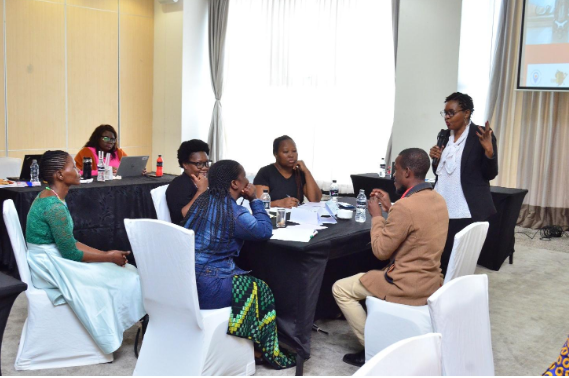
The Malawi and Rwanda workshops were facilitated by Ms. Virginia Mzunzu, DIWA’s Program Manager, while in Kenya, sessions were led by Ms. Christine, COVAW’s Program Manager. Each workshop provided an inclusive and interactive learning environment designed to equip participants with the tools and confidence to drive change in their respective countries. Facilitation combined interactive dialogue, storytelling, and practical exercises, ensuring that participants could apply learning to real-life advocacy.
“Confidence is not just personal, it’s political,” Virginia noted. “When women with disabilities believe in their power and voice, they can redefine leadership and justice in their communities.”
Mr. George Chiusiwa, Director General of the Malawi Council for Disability Affairs (MACODA), officially opened the Malawi training. In his remarks, he emphasized that the rights of women and girls with disabilities are fundamental human rights and that empowering them as leaders and self-advocates is key to achieving inclusive development and justice.
Throughout the workshops, participants were taken through a series of thematic sessions, including:
- Disability, equality, inclusion, and intersectionality in EVAWG advocacy
- International and regional human rights frameworks (CRPD, CEDAW, Maputo Protocol, and AU-CEVAWG)
- Transformational and feminist leadership
- Advocacy and policy engagement strategies
- Understanding violence against women and girls with disabilities and referral pathways
- Confidence building and strengthening personal brand for effective advocacy
The training in all three countries culminated in action planning sessions, where participants developed concrete advocacy strategies to influence policy, enhance community awareness, and promote survivor support systems.
Participants also commemorated International Women’s Day 2025 during the Malawi session under the global theme “Accelerate Action,” reflecting on what this means for women and girls with disabilities.
Evaluations showed a significant increase in participants’ knowledge and confidence. In Malawi, for instance, 100% of participants reported improved understanding of the AU Convention on Ending Violence Against Women and Girls (CEVAWG), while 71% reported stronger knowledge of engaging human rights committees and treaty bodies.
Across all three countries, participants expressed renewed determination to lead community-based advocacy.
“I have learned to demand rights, not beg for them,” said Esther Mbite of the Voice of Women with Disabilities in Malawi.
“This training gave me courage to stand for public office in my district,” added Mphamvu Kalima from NEGWDM.
Through this initiative, DIWA and its partners have strengthened an intergenerational network of women with disabilities leaders across East and Southern Africa, a growing movement advocating for equality, inclusion, and justice.
link for the featured story: