
Abidjan, Côte d’Ivoire – October 2025
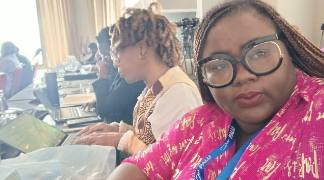
Disabled Women in Africa (DIWA) joined legal experts, feminist advocates, and human rights defenders at the Pan-African Lawyers Union (PALU) meeting in Abidjan, contributing to the development of an Advisory Opinion on Disability and Femicide in Africa.
The engagement, convened under the auspices of the African Union’s human rights framework, sought to provide legal clarity and policy guidance on how African States can prevent, investigate, and respond to femicide, particularly where women with disabilities are disproportionately affected by gender-based violence, institutional neglect, and impunity.
Bringing a Disability Lens to Africa’s Legal Discourse
Represented by Ruth Mkutumula, Executive Director of DIWA who engaged in person, and Madam Adelaide Nyigina, Chairperson of DIWA from Burundi, who participated virtually, DIWA provided expert input on the intersection of disability, gender, and justice, highlighting the invisibility of women with disabilities within legal and policy responses to femicide across the continent.
“Femicide is not only a gender issue — it is also a disability rights issue,” said Ruth Mkutumula. “Across Africa, women and girls with disabilities are killed in silence, their deaths uncounted, their stories untold. This Advisory Opinion is an opportunity to ensure that the African human rights system recognizes their experiences and demands justice.”
Madam Adelaide Nyigina, in her virtual remarks, commended the Pan-African Lawyers Union for opening space for cross-movement dialogue and stressed the need for inclusive jurisprudence that recognizes multiple and intersecting forms of discrimination.
“When courts, lawyers, and policymakers understand the realities of women with disabilities, the justice system becomes a true instrument of equality,” Madam Nyigina observed. “This Advisory Opinion will guide our continent toward justice that leaves no woman behind.”
DIWA’s submission drew on findings from its regional work on ending violence against women and girls with disabilities (EVAWG) and national evidence from Malawi, Rwanda, and Kenya, demonstrating how stigma, inaccessible legal systems, and weak enforcement mechanisms continue to deny justice to victims and their families.
Influencing Legal and Policy Change
The Pan-African Lawyers Union (PALU), in collaboration with regional experts and civil society partners, is developing the Advisory Opinion for submission to the African Court on Human and Peoples’ Rights (AfCHPR). The opinion will serve as an interpretive tool for States, guiding the domestication of regional and international obligations under instruments such as the African Charter on Human and Peoples’ Rights, the Maputo Protocol, and the African Disability Protocol (ADP).
DIWA’s contribution emphasized that future legal instruments and national laws must:
- Recognize femicide against women with disabilities as a distinct and aggravated form of gender-based violence;
- Ensure accessible reporting, investigation, and prosecution mechanisms;
- Integrate reasonable accommodation and support measures for survivors and witnesses; and
- Mandate inclusive data collection and accountability systems to monitor trends and patterns of violence.
A Call for Continental Accountability
DIWA’s participation in Abidjan reinforces its growing leadership in regional and continental legal advocacy, building on engagements with the African Commission on Human and Peoples’ Rights, the African Union Committee on Gender and Disability, and the African Committee of Experts on the Rights and Welfare of the Child.
By contributing to PALU’s Advisory Opinion, DIWA reaffirmed its commitment to ensuring that continental human rights frameworks reflect the lived realities of women with disabilities.
“Our contribution ensures that Africa’s evolving jurisprudence reflects every woman’s reality,” Ruth concluded. “When women with disabilities are seen in the law, protected by the law, and empowered through the law, that is when justice becomes real.”
About the Pan-African Lawyers Union (PALU)
The Pan-African Lawyers Union (PALU) is the continental body of lawyers and law societies in Africa, promoting justice, good governance, and the rule of law. PALU works with regional courts, AU organs, and civil society partners to advance human rights and legal reform across the continent.