
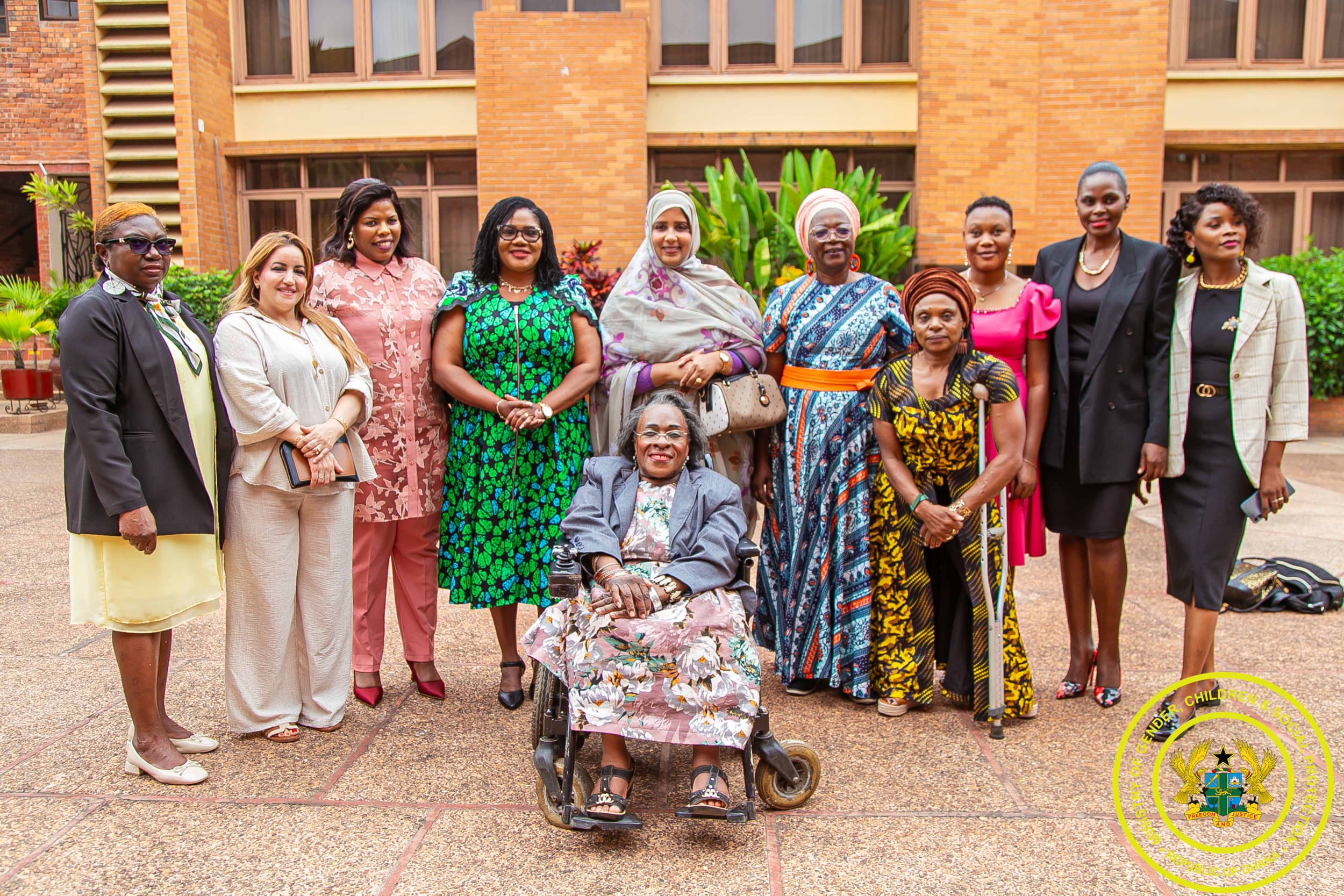
DIWA Elevates Disability Inclusion in Continental Gender Lawmaking
Nairobi, Kenya & Accra, Ghana in August – 2025
Disabled Women in Africa (DIWA) made a significant contribution to the Pan-African Parliament (PAP) and African Union (AU) consultative processes on the Model Law on Gender Equality and Equity, held in Nairobi, Kenya in 2024, and in Accra, Ghana in 2025.
The consultations were part of a continent-wide effort to refine and validate the Model Law on Gender Equality and Equity, a landmark legislative framework that will harmonize gender equality and human rights standards across African Union Member States. The law seeks to operationalize commitments under the Maputo Protocol, the African Charter on Human and Peoples’ Rights, and Agenda 2063, ensuring that all women and girls in Africa, especially those with disabilities, enjoy equal rights and opportunities.
Recognizing that gender equality cannot be achieved without disability inclusion, DIWA sponsored six women with disabilities from Malawi and Zambia to participate and contribute to the consultative sessions in Nairobi and Accra.
The delegation included:
- Beatrice Mutale and Trudy, both representing the Zambia Federation of Women with Disabilities (ZAFWOD);
- Juliana Mbangwe, member of the Network of Women and Girls with Disabilities in Malawi (NEGWDM); and
- Ruth Mkutumula, Mwayiwathu Kusakala, and Musola Kaseketi from the DIWA Secretariat.
Their participation was supported through the SPADRA Project (Strengthening Partnerships to Advance Disability Rights in Africa) , a regional initiative funded by the Swedish International Development Cooperation Agency (SIDA) and implemented in consortium with the African Disability Forum (ADF) and Inclusion Africa.
Through this initiative, DIWA ensured that the lived realities, leadership, and policy insights of women with disabilities directly informed one of the AU’s most important gender equality frameworks.
Women with Disabilities Influence the Gender Equality Agenda
During the consultations, DIWA’s delegation presented strong, evidence-based recommendations emphasizing that the Model Law must explicitly integrate disability inclusion as a central pillar of gender equality.
The delegates advocated for:
- Recognition of women with disabilities as a distinct group needing targeted policy measures;
- Accessibility and reasonable accommodation in governance, education, and employment;
- Equal access to justice and political participation;
- Stronger provisions on sexual and reproductive health and rights (SRHR); and
- Protection against gender-based violence and harmful practices, including forced sterilization and institutionalization.
“For the first time, we felt that our experiences as women with disabilities were not just heard but valued,” said Beatrice Mutale, representing Zambia Federation of Women with Disabilities. “Our contribution reminded policymakers that gender equality in Africa cannot be complete if women with disabilities remain invisible in the laws that shape our lives.”
“This process showed me that advocacy at the continental level begins with confidence and solidarity,” added Juliana Mbangwe from NEGWDM – Malawi. “We brought the realities of rural women with disabilities into a space where policy is made, and it was powerful to see our voices influencing change.”
Inclusive Partnerships for Transformative Change
DIWA’s participation was part of its broader commitment under SPADRA to ensure women with disabilities lead and shape policy processes at regional and continental levels. The Pan-African Parliament’s Committee on Gender, Family, Youth, and People with Disabilities commended DIWA for its inclusive advocacy, describing it as a model of partnership that aligns with the African Disability Protocol (ADP) and the AU Convention on Ending Violence Against Women and Girls (AU-CEVAWG).
A Step Forward for Africa’s Gender Equality Agenda
The Model Law on Gender Equality and Equity is expected to be finalized and tabled for adoption by the Pan-African Parliament in 2026. Once adopted, it will serve as a guiding framework for AU Member States to align their national gender equality laws with inclusive and intersectional standards that protect and empower all women.
DIWA and its partners under the SPADRA consortium remain committed to ensuring that the voices, priorities, and lived experiences of women with disabilities continue to shape Africa’s evolving gender equality architecture.
About the SPADRA Project
The Strengthening Partnerships to Advance Disability Rights in Africa (SPADRA) Project is a multi-country initiative funded by SIDA and implemented in consortium with the African Disability Forum (ADF), Inclusion Africa, and Disabled Women in Africa (DIWA). It aims to enhance regional collaboration, advocacy, and leadership for the realization of disability rights across the African continent.

